
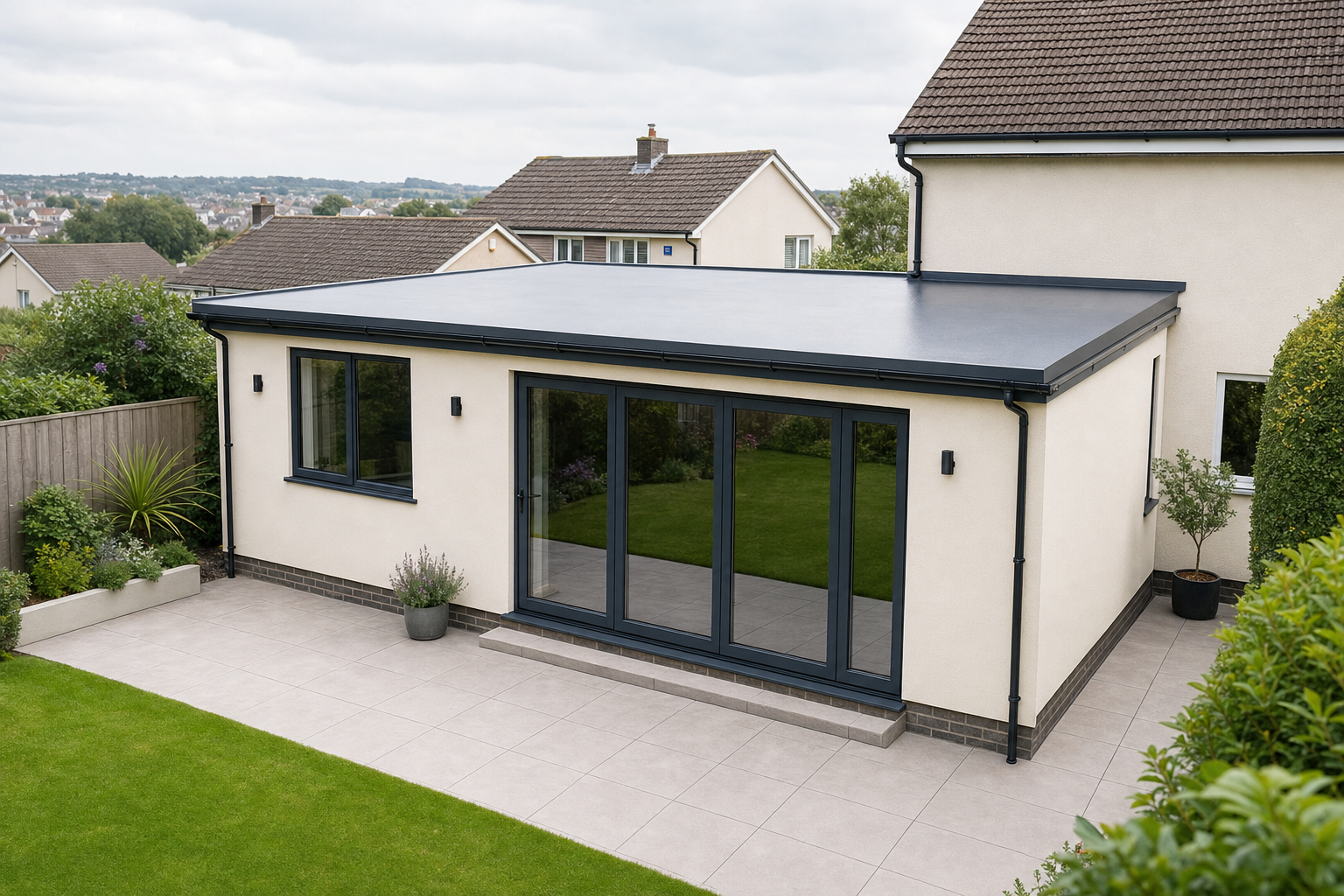
What makes GRP flat roofing worthwhile
Seamless waterproofing
A joint-free finish helps remove weak lines where water often starts testing a roof.
Neat domestic appearance
Well-formed edges and upstands give smaller flat roofs a cleaner overall finish.
Prepared roof deck first
We do not treat the visible topcoat as the only part that matters on flat roofs.
Why many homes suit a GRP flat roof
A flat roof often needs the waterproof layer to do a very straightforward job: keep water out without relying on lots of joints and weak seams. GRP fibreglass roofing gives you a reinforced, joint-free surface formed over a suitable deck and finished with a protective topcoat. We install fibreglass flat roof systems in Plymouth for domestic roof sections such as extensions, porches and similar structures. With CJ Roofing SW Ltd, the focus is on a sound base, careful installation and a clean finished surface that looks properly planned rather than quickly patched in.
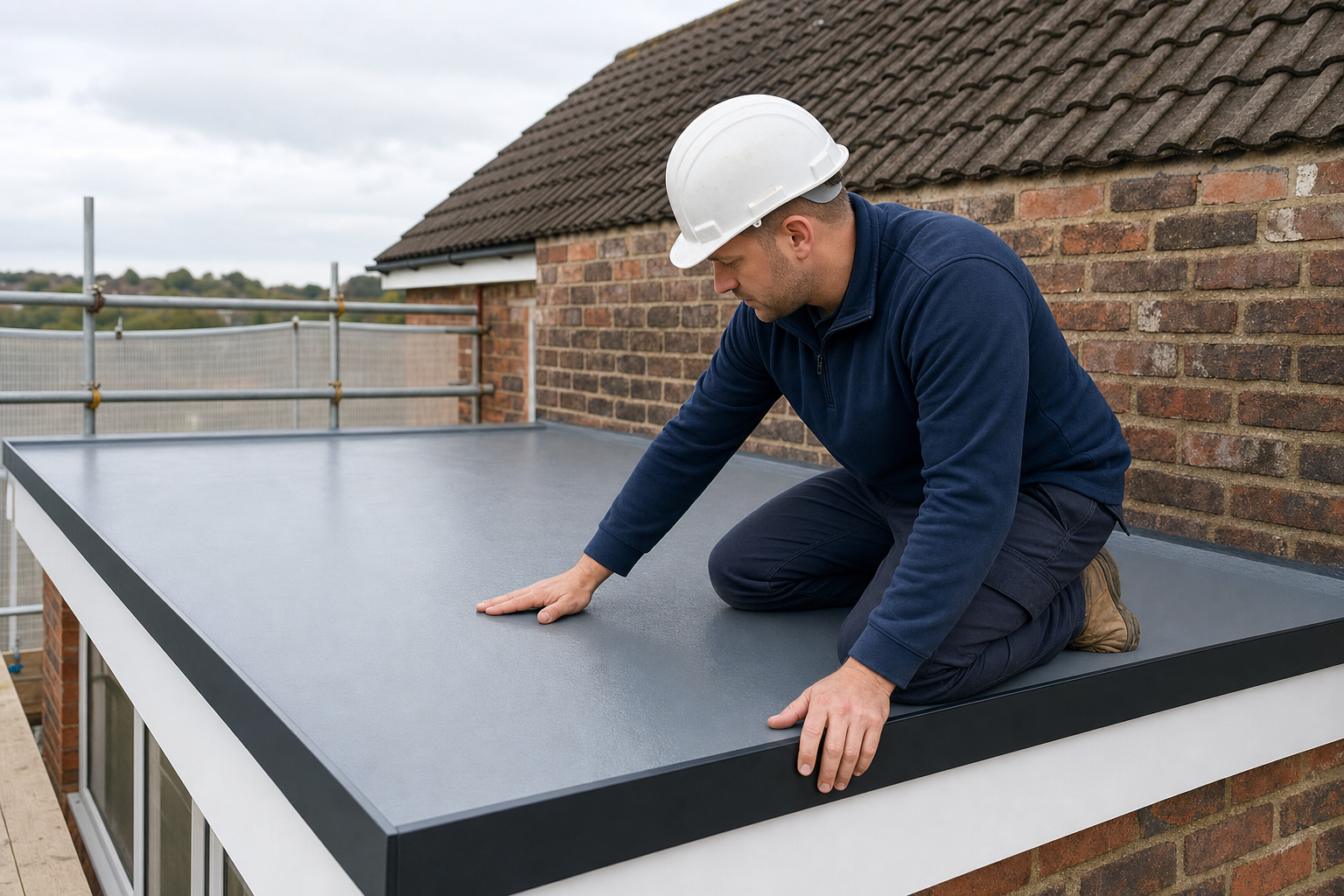
The deck, falls and edges matter most
A GRP roof only performs well when the structure beneath it is ready for the system. We look at the condition of the decking, the falls needed to move water, outlet positions and the edge details that stop water creeping where it should not. A quote from CJ Roofing SW Ltd explains the preparation involved before resin and fibreglass reinforcement are laid and the topcoat is applied. Dry conditions and patient curing also matter, because rushing a flat roof is an excellent way to create the very problems you were trying to avoid.
Frequently asked questions
Is GRP a good option for domestic flat roof sections?
Yes, it is often a strong fit for smaller domestic areas such as extensions, porches and similar flat roof sections. The main attraction is the reinforced, seamless waterproof layer. The important point is that the roof deck and detailing beneath it still need to be right for the system to perform well.
What do you check before laying a fibreglass flat roof?
We look at the decking, the falls across the roof, the outlet positions and the edge and upstand details. Those parts shape how the water leaves the roof and how well the GRP finish can be formed. Good preparation under the surface is what gives the final roof a proper chance of lasting.
Why do dry conditions matter during installation?
GRP roofing needs suitable conditions so the resin, reinforcement and topcoat can be laid and cured properly. If the weather is wrong, it is better to wait than force the job through. That patience helps the finished roof cure as intended and avoids problems caused by rushed application.