
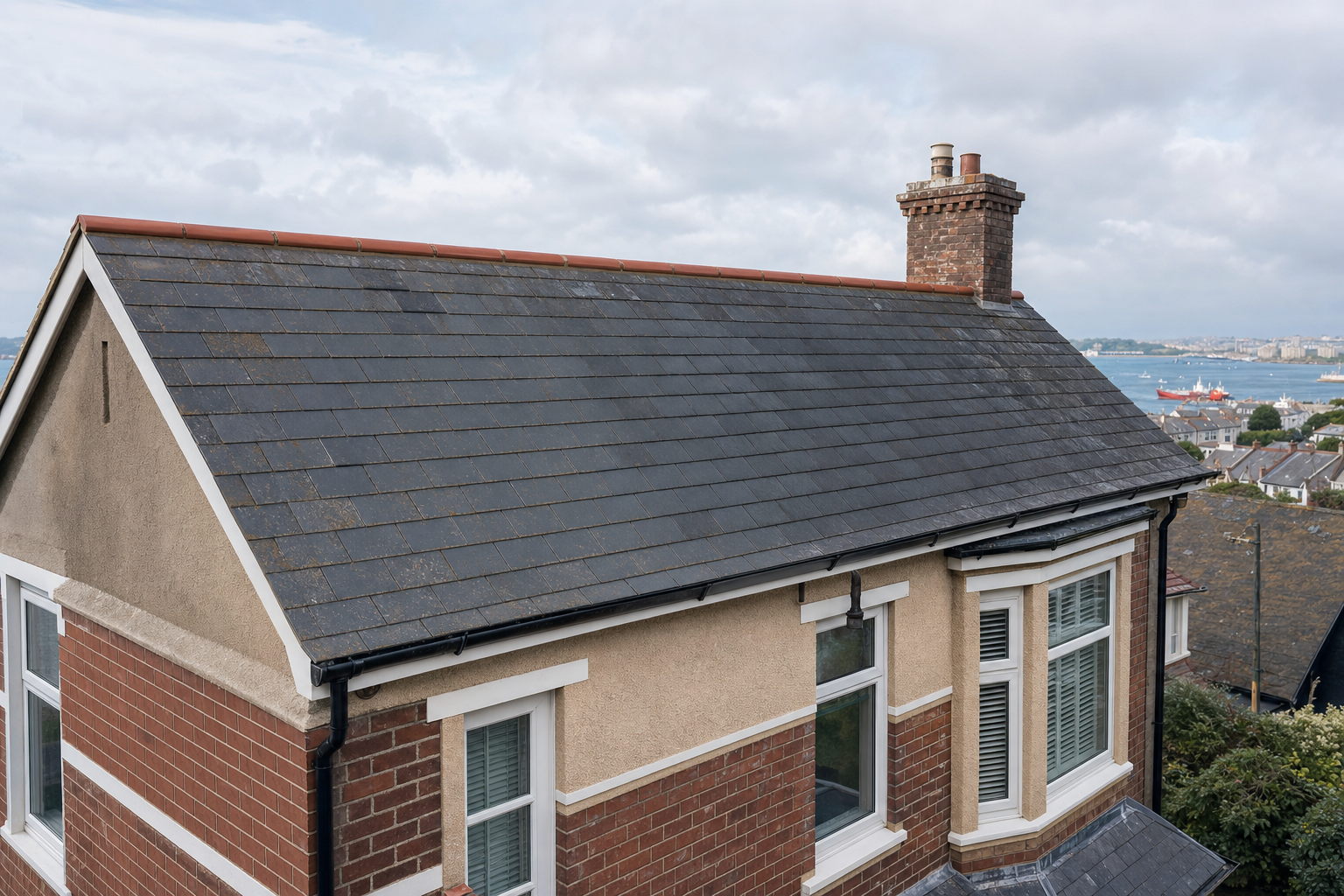
What a sound ridge repair provides
Loose ridges made secure
We address movement properly so the highest roof junction is not left vulnerable.
A neater roof line
Good alignment helps the repaired ridge sit cleanly across the roof top.
Checks beneath the ridge
We inspect the coverings below so the repair suits the full affected section.
Why ridge movement needs proper attention
Ridge tiles sit at the highest junction on a pitched roof, so once they loosen, crack or shift, the weather soon starts taking advantage. You may notice cracked mortar, missing sections or ridge lines that no longer look settled after strong wind. We repair ridge tile faults for homeowners in Plymouth before that movement has the chance to affect more of the roof below. With CJ Roofing SW Ltd, the aim is to deal with the ridge detail securely rather than simply tidying the obvious crack and hoping the rest stays put.
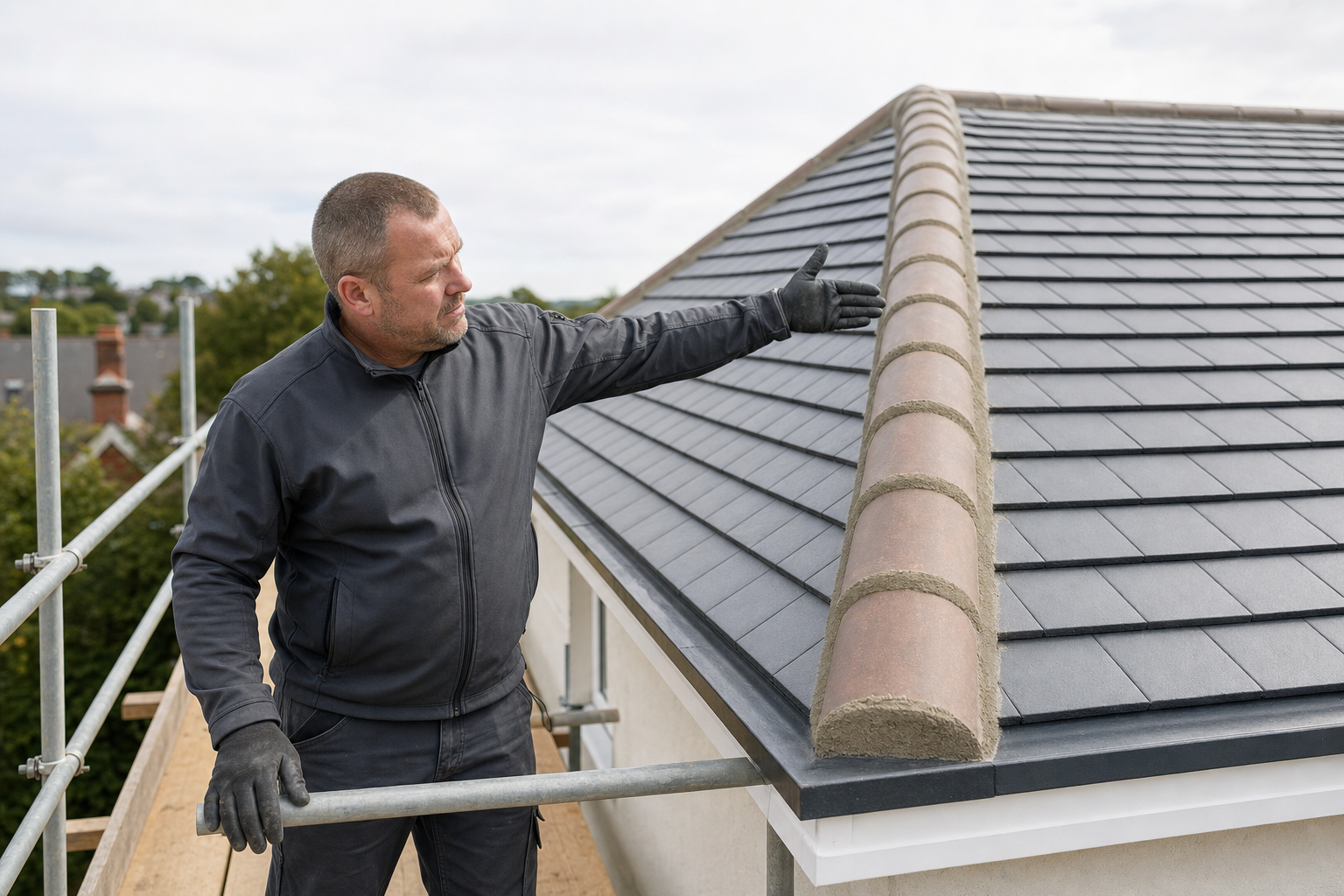
Checking the ridge system and the tiles below
The right repair depends on how the existing ridge is fixed and how far the movement has spread. We assess the ridge units, the bedding or mechanical fixing system and the roof coverings directly below the affected section. A quote from CJ Roofing SW Ltd explains whether local rebedding, replacement of damaged ridge units or correction of defective fixings is the sensible route. Secure alignment matters too, because a ridge should protect the roof continuously rather than looking straight while leaving small weak spots along the run.
Frequently asked questions
What are the signs ridge tiles need repair?
Common signs include cracked mortar, visible movement, missing sections and ridge tiles that look out of line after windy weather. Any of those can mean the roof's highest junction is no longer weathering as it should, so it is worth having the ridge checked before the fault grows.
Do you repair one ridge section or the whole run?
That depends on the condition we find. Some roofs need local work to a short affected area, while others show wider movement or failure that makes a larger repair more sensible. We assess the ridge system and explain the scope that best matches the condition of the roof.
Why do ridge tiles move after bad weather?
They are exposed to wind and rain at the highest point of the roof, so weak mortar, damaged units or failing fixings can be shown up quickly in rough conditions. Once movement starts, the ridge becomes more vulnerable to further weather and should be repaired before the next spell of bad luck arrives.